
Why the Private Cloud Is Still the Quiet Backbone of Serious Tech
Let’s cut the marketing fluff. While everyone’s yelling about public cloud, serverless, and whatever as-a-service just dropped on Twitter, the private cloud is over here doing the unglamorous but critical work of keeping serious businesses running. Think less Instagram influencer, more grizzled infrastructure engineer who drinks their coffee black and knows what latency under load really means.
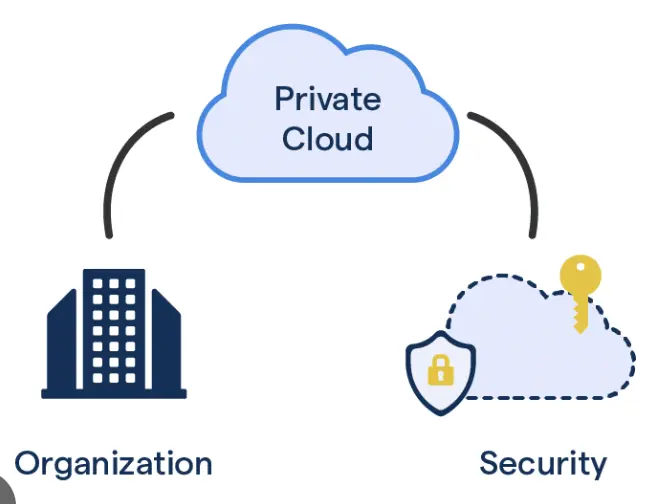
Behind the Curtain: What’s Really Running on Private Cloud
When it comes to workloads that absolutely cannot live in the wild west of the public cloud, the private cloud steps in like a well-paid bouncer. We’re talking highly regulated industries: finance, healthcare, defense. You know — places where compliance isn’t a checkbox, it’s a federal obligation.
But it’s not just about regulation. Performance-sensitive workloads (low latency, high IOPS, huge data throughput) often sit better on gear you control, fine-tune, and optimize to death. And don’t forget companies with existing infrastructure that’s already amortized — those aren’t moving to hyperscalers just to chase buzzwords.
Cost Isn’t Always King (But It’s Still on the Throne)
Let’s address the elephant in the data center: private cloud isn’t cheap. But here’s the thing — when you’re running predictable, high-volume workloads 24/7, the public cloud’s “pay-as-you-go” model can get… brutal. Surprise bills, anyone?
Owning your infrastructure — servers, switches, storage, licensing — hurts upfront, sure. But once it’s deployed, your CFO can stop twitching every time the AWS billing cycle hits. Predictable costs, long-term ROI, and actual asset value on the books — boring, yes, but CFOs love boring.
Control Freaks Unite
Private cloud gives you control. Not the illusion of control. Real control. Need to force GPU allocation for a batch AI training job? Want to tune your network fabric for sub-millisecond latency? Try doing that in the public cloud without mortgaging your future.
Security teams also sleep better when everything sits behind their firewalls, not shared across multi-tenant infrastructure in a mystery region that may or may not be located in Dublin. In private cloud, you know where your data lives, who touched it, and when. Zero trust doesn’t mean zero visibility.
Hybrid Is the Real Endgame
Here’s the twist: it’s not private vs. public anymore. The real power play is hybrid. Smart enterprises are running sensitive workloads on-prem with private cloud platforms like OpenStack, VMware Cloud Foundation, or even custom Kubernetes setups — and bursting into the public cloud when elasticity is actually needed.
This isn’t about going “all-in” on one camp. It’s about choosing the right tool for the job. Think local dev + cloud test. Or ML model training on your big GPU racks, then deploying inference via edge or serverless functions. That’s not a migration, that’s orchestration.
The Rise of Automation and the Fall of Boring Ops
Yes, private cloud used to mean babysitting bare metal and screaming at SANs. But those days are (mostly) gone. Today’s platforms are API-first, infrastructure-as-code-friendly, and often hook directly into your CI/CD pipelines.
Tools like Terraform, Ansible, and Kubernetes don’t care if your nodes are in AWS or your own data center. The DevOps revolution finally reached the basement — and it brought YAML.
TL;DR — Private Cloud Isn’t Dead, It’s Just Not Shouting
If you’re building a SaaS MVP, sure, spin it up on GCP. But if you’re running mission-critical systems, crunching petabytes of data, or answering to regulators, you’re probably already in the private cloud — or should be.
It’s not sexy, it’s not simple, but it’s rock-solid. And when your app needs to work, not just scale, the private cloud doesn’t flinch.
Not Trendy, Just Trusted
Private cloud won’t win you likes on LinkedIn or get mentioned in VC pitch decks. It’s not chasing the latest tech fashion. But that’s kind of the point. It’s stable, customizable, and built for businesses that need reliability over razzle-dazzle.
In a world obsessed with ephemeral containers and functions that last 200ms, the private cloud is the infrastructure equivalent of a diesel engine: not flashy, but it’ll pull the heaviest load without breaking a sweat.
So next time someone tries to tell you private cloud is outdated, just smile, sip your coffee, and remember — the loudest tech isn’t always the one keeping the lights on.
Subscribe to our newsletter
& plug into
the world of technology